Saturday, November 20, 2010

3. Surviving Narcissistic Personality Disorder


Awareness is key to understanding an NPD, because the only
one you can save here is YOU.

Get out of any relationship with these people the minute
you realize what they are. (having said that; by the time you
have been around long enough to see through their spell, you
will have been thoroughly charmed and seduced, and find the
gravitational pull of their high energy lure difficult to escape.
They have a propensity for getting inside your wheel case;
figuring you out, giving you enough of what you want, and
taking advantage of your emotional discord are their strengths.)

It's ironic that even knowing how corrupt and even dangerous
someone is, it's difficult to escape the insidious appeal
of the effect they have on people.

Confronting them with the reality of what is happening, how
 you feel, how they have hurt you, how they are hurting
themselves, etc will not bring about change. The only means
of their improving is to see that they are doing wrong, admitting
 it, and seeking counseling with a qualified and experienced
therapist over time. That's not likely to happen with an NPD.

A complete transformation is unlikely, but there are some
general rules when it comes to an NPD seeing the need--and
possibility--for change. Another traumatic event, or a huge change
that causes attitudes and insights to alter (such as mid-life crisis,
religious overhaul, etc.) can give an NPD the genesis of desire to
change. But the work is long, slow, and excruciating. It shouldn't be
attempted alone--either without supports or professional help--but,
alas, even after an epiphany, NPDs are reluctant to share anything
with anyone. Without an objective outside eye, the NPD is still
at the mercy of their own warped perceptions and interpretations.

What does happen is that you have been thoroughly indoctrinated
by one of the most calculating and insightful minds on the planet.
 So you may start to;
-question your judgment
-question the actual turn of events as you recall them
-question why others aren't hip to the person's real story
-fear social stigmatization from separating from someone who has
  a stranglehold on the rest of a   mutual group of friends, community,
  family, etc.
-worry over the well-being of the NPD, even after he/she has
  continually shown themselves unconcerned  for you
-become full of self-doubt that you allowed yourself to be so used
and abused
-question that anyone anywhere is truthful, kind, real, or that integrity
exists
-feel foolish/humiliated/hurt that you could have fallen for their fake
  emotions and the relationship of lies
-have difficulty overcoming the brainwashing of how 'wonderful'
they are,   and how 'unimportant' you are without them
...and much more....

Saturday, October 23, 2010

Inner Strength

If we hold fast to the truth we know deep within us,
ignoring all the external voices and distractions, we
will have all the strength necessary to survive and
thrive.

We can never make everyone understand who we are,
no matter how clearly we live. Explaining ourselves to
others is not possible; worry about being misinterpreted
is a waste of time and energy.

We follow our own spirit, and it may not mirror or
even resemble the beaten path at all. This makes others
uncomfortable and possibly antagonistic. Even those
closest to us do not automatically see what is best for us.
It's incumbent upon us to release ourselves from the
rigidity of expectations both internal and external.

If we are secure enough to risk being maligned and
gossiped about, we will achieve so much more. As the
song says, "You can't please everyone, so you have to
please yourself."

We have one obligation in this world; to fulfill our specific
heart's needs. No one else can determine what that need is.
No one else's opinion in relation to this path matters. It
is intensely personal and intimate.

To other people, the idea of what we involve ourselves
with is a superficial infatuation at best. The idea that
we are obliged to trying to explain ourselves, our motives,
our dreams to another person is nonsense. Some things
can't be related adequately, even if the person had any
interest in knowing.

Know yourself, and determine that you will make your goal,
some how, some way.

Thursday, October 7, 2010

Live and Let Live

Today, let me see the good in each person.

Let me be kind to the mistakes of others,
as well as myself.

Let me allow everyone else to find the truth
that works for them.

May I remember that judgment is seeking
to avoid my faults by blaming another.

I hope to keep in touch with certain lessons;
People love and live the best they know how.
People learn in their own time and way.
People have hurts I can't imagine and motives
    I can't know.

Let it be......and be easy.

Wednesday, August 25, 2010

The Gift

To instruct someone on
How to Think
or What to Say
leaves them with little
at the end of the day.


Promoting absolutes
and labeling another wrong
presumes we are
at journey's end
with nothing more to glean.


When we Help
someone find the path
and answers that are correct
for them,
we learn as well.


The world is large;
look to the light,
not your feet.

Monday, August 23, 2010

COMMON GROUND

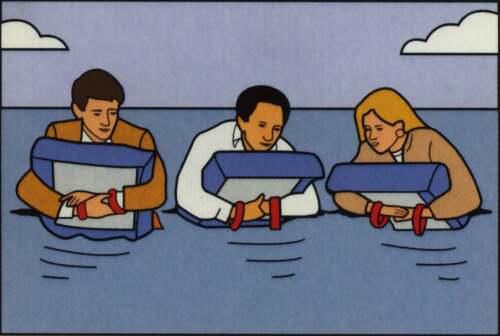
Just trying to stay afloat!
There are a lot of people in crisis right now. Things
world-wide are turning topsy-turvy. In some cases,
people who have never had significant issues are
being plagued with the onset of multiple problems
at once. There aren't adequate sources to help every
person, and because of overload, even those able
and willing to help are suffering fatigue. It's rough,
and it's likely going to get worse still, before improving.

There are still people maintaining the illusion that all
is well; our society's duality is still its chief export.
Maintaining the illusion of cool while the house is on
fire.

Make no mistake, though; it's real.
It's widespread.
The help just isn't there.
You aren't alone.
You aren't crazy.

We are a nation obsessed with falling apart in private
and maintaining posturing in public. This keeps us
thinking that we've lost our minds; we hear one story
on the news but our own senses tell another. We know
our experience doesn't match what officials say should
or is happening. So we start to assume that we must be
wrong, and question ourselves.

Surely our fatalism is a sign of losing our minds?
 Nah..it's just nerves and fear reacting to changes.

We're losing people all at once, and feel alone and scared.
Loss of job, change of living arrangements, divorce,
separation, deaths, and more can happen in packs and
make us feel like we're jinxed or abandoned.
 Nah...we're just grieving the death of relationships, and
it does bring sadness and despair. It's natural.

Simple questions nag us...we get obsessed over 'stupid'
things. When feeling vulnerable and disrupted, it's normal
to focus on smaller problems, making mountains out of
molehills. Some days, everything seems to overwhelm us.
This, too, shall pass.

We are more capable than we imagine.
We can adjust and reinvent ourselves.
We are not the sum total of our things.
We are not identified by a job.
We are complete with or without others.
We are stronger than we know.

It's just the human condition going through a growth spurt.
Don't beat yourself up; you're right where you need to be.

There is an 'other side' to all this.....we're only experiencing
what millions before have been through. We just have to
accept that change is inevitable and control is an illusion.
Once we know we don't know everything, and no one else
does either, it's all good.

Hang tough.

Wednesday, August 18, 2010

To Nag or Not to Nag?!

So, say you have this friend.....


And they're a real go-getter. They have the future planned
to the 'T', probably scheduling when they clip their nails.
Their bank ledger is their best friend. Nothing they do is
left to chance, it seems.

But they take no control over their physical health whatsoever.

In fact, their fitness checklist reads like a "How To" Guide for
Heart Attacks;
  * Poor and limited sleep
  * Over-scheduled, hectic days; extreme stress on a regular basis
  * Poor eating habits and abysmal dietary choices
  * No exercise
  * Suppression of emotions; no outlet for anger, frustrations
  * Increase in weight, hyper-tension, high blood pressure, etc.
  * Chain-smoker

Now, it might seem that these lifestyle choices would be
obviously detrimental, especially to someone so consumed
about preparing for the future and their security. So why doesn't
a friend or family member take the initiative and make the necessary
changes in their life to increase good physical and mental health.
Surely that's as important to them and their family's future returns
as savings and planning?

Maybe this is the place where a well-intentioned friend thinks
they should step in and address the matter; asking their friend
to please address these warning signs before there is no
opportunity to do so. And yet, because you know your friend,
you also know how they think somewhat. You are aware
that;
  - They don't like conflict of any kind
  - They don't like for attention to be on them or discuss self
  - They don't like thinking about their body, maybe for valid reasons
  - They aren't very appreciative of advice or being evaluated
  - They tend to take even concern and compassion as criticism
  - They may simply get freaked out even discussing mortality
(Yes, I just described 95% of the male populace in North America. 
Now you know why there's a blog entry!)

So, the question(s) may become "Is it going to do more harm than
good if I address this matter? What if my friend takes great offense
and doesn't want to speak to me any more? Can I really make a
difference by saying something?"

These are things you must answer for yourself, ultimately, but
let's look at some of the issues at least.

Do you care enough about your friend that bringing up the idea
that might get their perspective changed is worth any initial resistance
or hostility?

Does your friend value you and your relationship enough to listen
or at least come around?

Is your intention to change or control someone, or simply get them
to think about something important? (Remember, we all have areas
we don't dedicate ourselves to fully; broaching this personal matter
may make your friend feel compelled to address your 'shortcomings.')

One recommendation is personalizing the discussion. Don't just
critique your friend's actions; tell them why you're worried. Talk about
how much you care, remind them of the things that matter. Even let them
know of your apprehension of talking to them and that you were
concerned about pushing them away. It might help better detail
where you're coming from. You have a relationship; talk from that
perspective.

As any spouse, parent, or doctor can tell you, getting another
human being to change their mind or their ways--even when it is for
their own good--is highly unlikely. We humans value our indepen-
dence, stubbornness, and sense of superiority more than almost
anything else. We really dislike being told what to do. Even to the
extreme of not doing something beneficial to self if the idea for it
came from someone else; we wouldn't want to get caught following
someone else's advice.

Another factor in this is that we are reluctant to absorb new
information or change thinking. If we have been living a certain way
for 40-some-odd years, we would have to give serious active
thought to how our actions and our problems might be related.
Seems common sense from the outside looking in, but having a light
bulb go off takes a lot. We often have to hear a new idea 20 or 30
times before we start opening up to it--or even hearing it.

And, here's the conundrum. If you don't engage in a series of
introductions to the information (leaving pamphlets, sending e-mails,
mentioning risk factors, having a sit-down talk) they may not get it
and be informed. Yet, if you do keep promoting the information to
get it to sink in, you may alienate your friend or make them adverse
to taking the advice because they have gotten defensive and offended
about the persistence. If you nag someone about diet, they may gorge
on extra greasy cheeseburgers just to prove how much you don't
control them.

It's a power thing. Even when they're out of control, people like
the illusion that they have it. So evaluate carefully before proceeding.
My personal theory is that it's better to have somebody alive to be
pissed off at my interference than lose them because I was afraid
to say anything...but we all have to find what works for us. The key
I think is to not have expectations that you're going to change your
friend by intervening; and not being offended if they don't listen. For
better or worse, people are ultimately in charge of their own lives.

Until someone wants to change for their own benefit and by their
own power, no change is going to be complete or lasting. Here's
another thought; when concerned for a friend's health activities....
how meticulously are we caring for our own? It's always easier to
focus on others than self; that may have been what got your friend
in trouble in the first place!

Tuesday, August 17, 2010

Disconnect


There can be no
bond
between two people
when there is
no truth
between two people

continue the exploration
outward;
the journey 
within
will wait for you